About Cabernet Sauvignon
Want to learn more about Cabernet Sauvignon?
The Cabernet Sauvignon Grapes
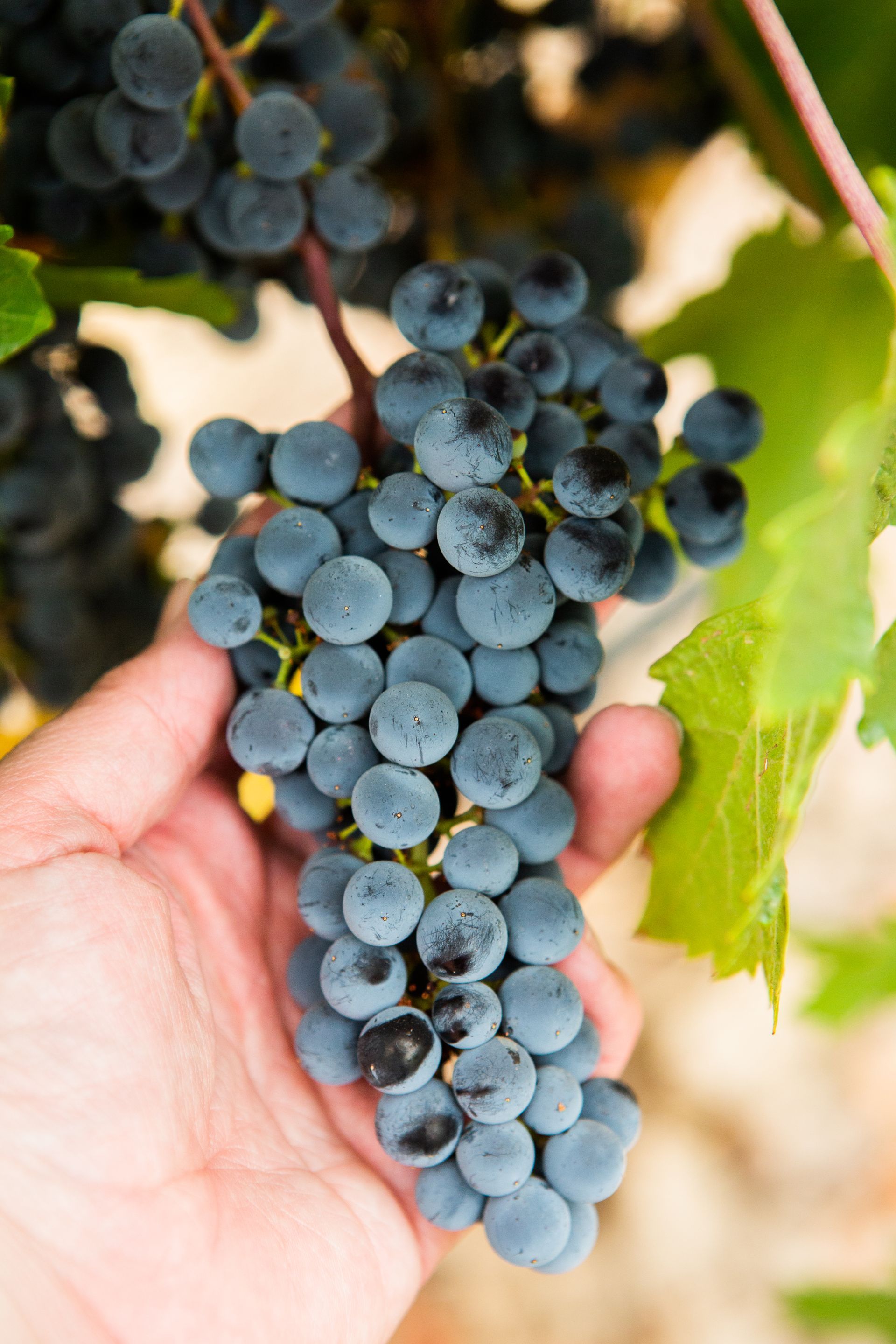
Originally from France, Cabernet Sauvignon is the most well-known and popular Bordeaux grape variety. Cabernet Sauvignon translates to “wild Cabernet” as it was a natural cross between Cabernet Franc and the white variety, Sauvignon Blanc. That is correct, a red variety naturally crossed with a white variety to make the esteemed king of red wine. This discovery was made in 1997 by John Bowers and Carole Meredith at UCDavis and it is said this took place in the 1600s.
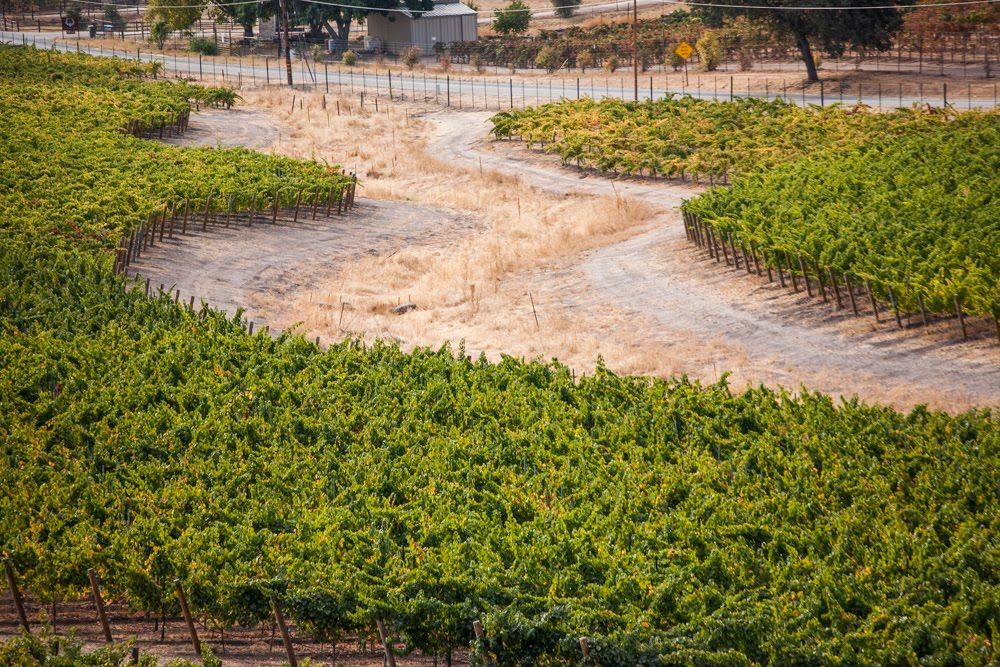
Cabernet Sauvignon is still widely grown in the Bordeaux region, but it is also grown in other parts of the world, such as the Central Valley of Chile, the Coonawarra region of Australia, and California’s Napa Valley and Paso Robles wine regions. The Paso Robles wine region, situated in the beautiful coastal area of Central California, primarily grows Cabernet.
Paso Robles wine country features single variety Cabs as well as Bordeaux blends. The region hosts annual hot Summers which produce big Cabernets featuring strong tannic structure and age worthiness.
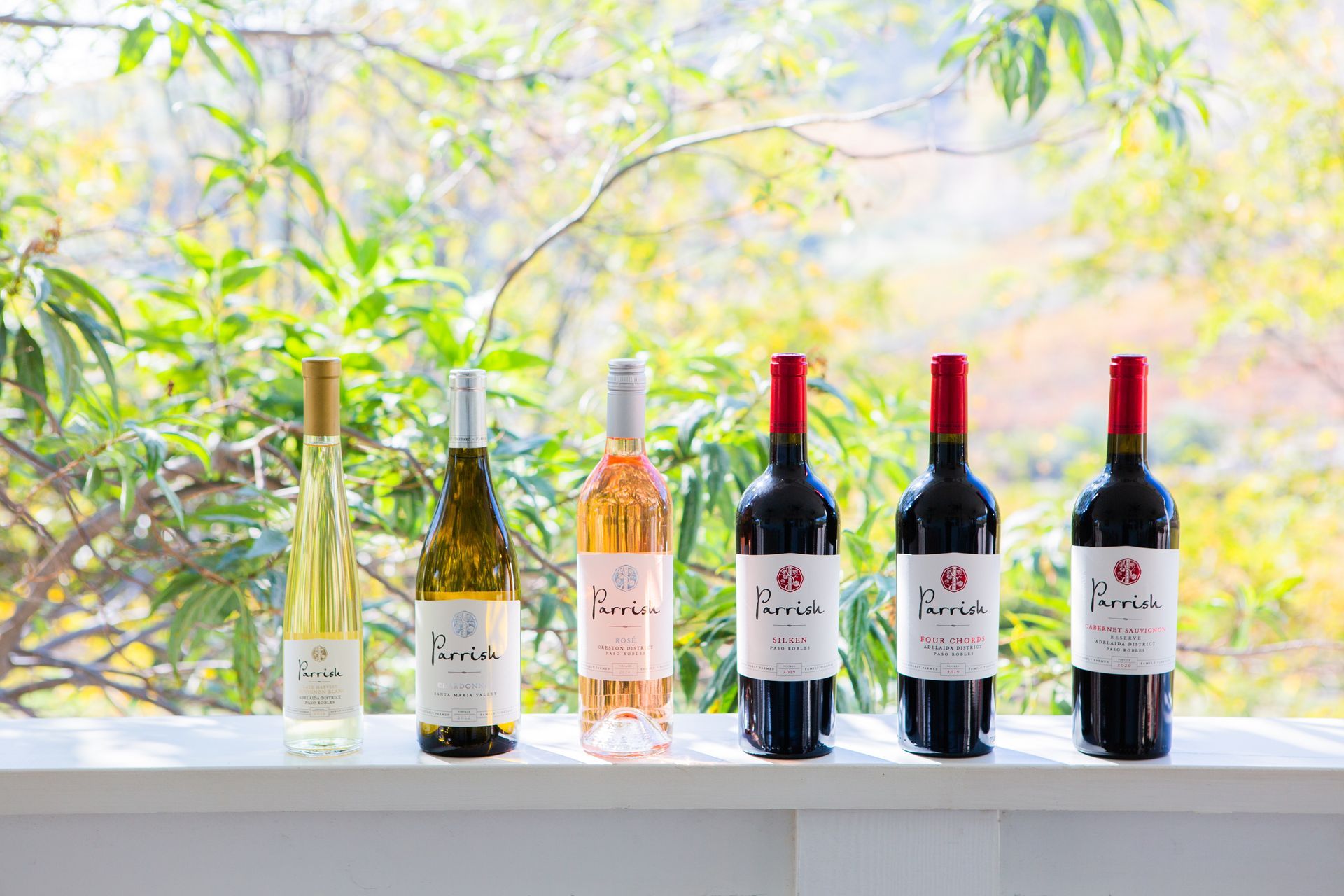
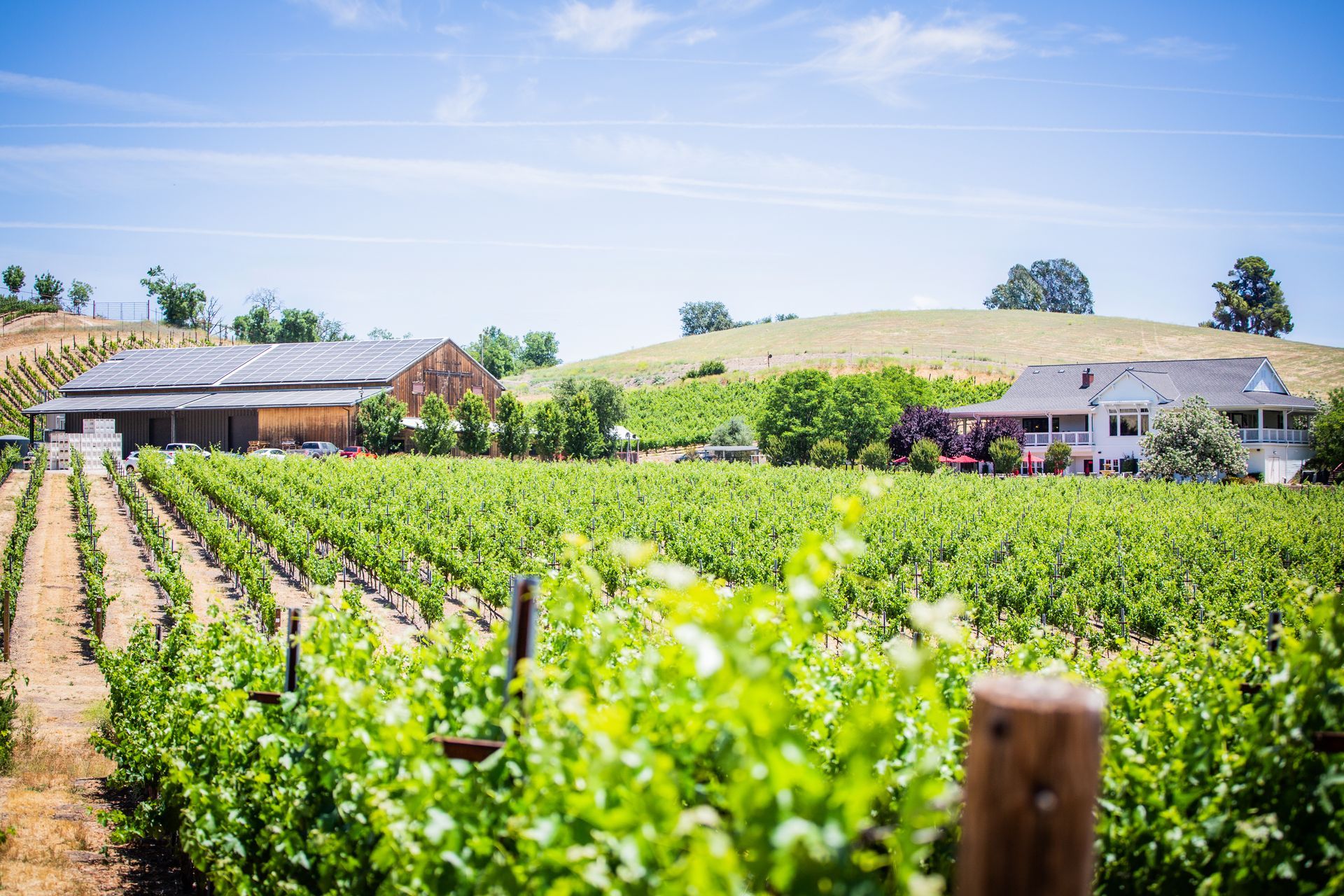
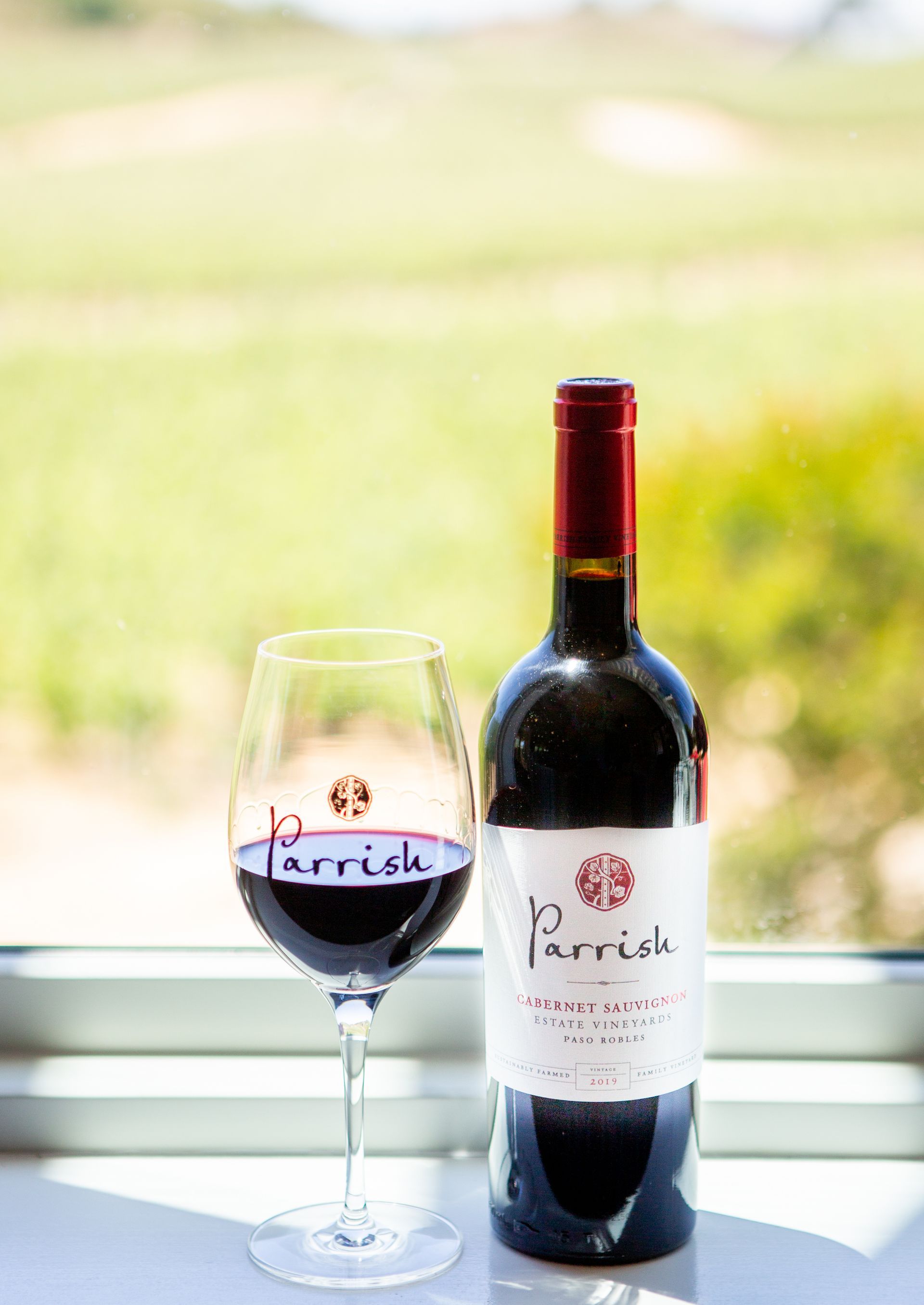
At Parrish Family Vineyard, we have two Cabernet Sauvignons, the Estate and the Reserve. The Estate Cabernet ($25) fruit comes from both of our vineyards in Adelaida and Creston, creating a wine with dark fruit, mineral complexity, and balanced structure. The Reserve Cabernet ($80) showcases the best of the best of our Adelaida Vineyard, where our Tasting Room is located. The vineyard’s soil of clay and calcareous produces pronounced acidity, full-rounded tannins, and sophisticated structure. The Reserve Cab features long-lasting notes of dark fruit, cocoa, baking spices, leather, and graphite.
How to Serve Cabernet Sauvignon
Like many bold reds, it is best to serve Cabernet Sauvignon at 60˚-65˚ F. The Cabernet Sauvignon, being a bolder wine, can become constrained if it is too cold. If the wine is too warm, the alcohol will be more pronounced. Another popular serving option is to decant the Cabernet Sauvignon for 1-2 hours prior to serving, as this will give the wine time to breathe and fully show its complexity.
Our favorite glass for serving Cabernet Sauvignon is the Universal Cabernet Bordeaux Wine Glass by Stolzle. We use these wine glasses in our Wine Club Members' lounge to give them a glass that best showcases our Cabernet as well as our Bordeaux Blends. The lovely U-shape helps direct the aromas of the palate, while the bowl of the glass allows for more circumference to swirl and move the wine to further open the bold Cabernet Sauvignon. Cabernet Sauvignon is a variety that can be cellared and aged for 20 years.
Cabernet Sauvignon Food Pairing
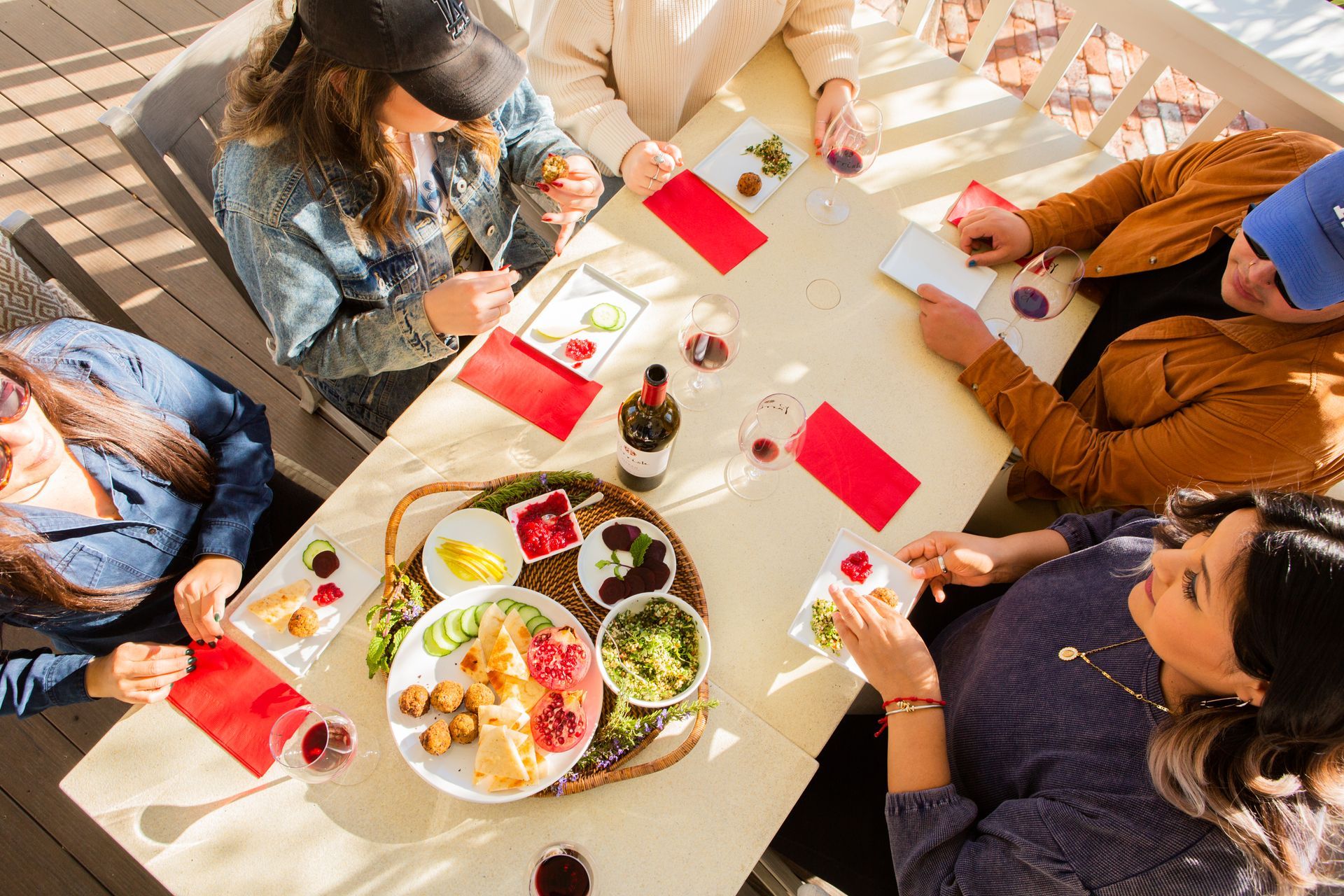
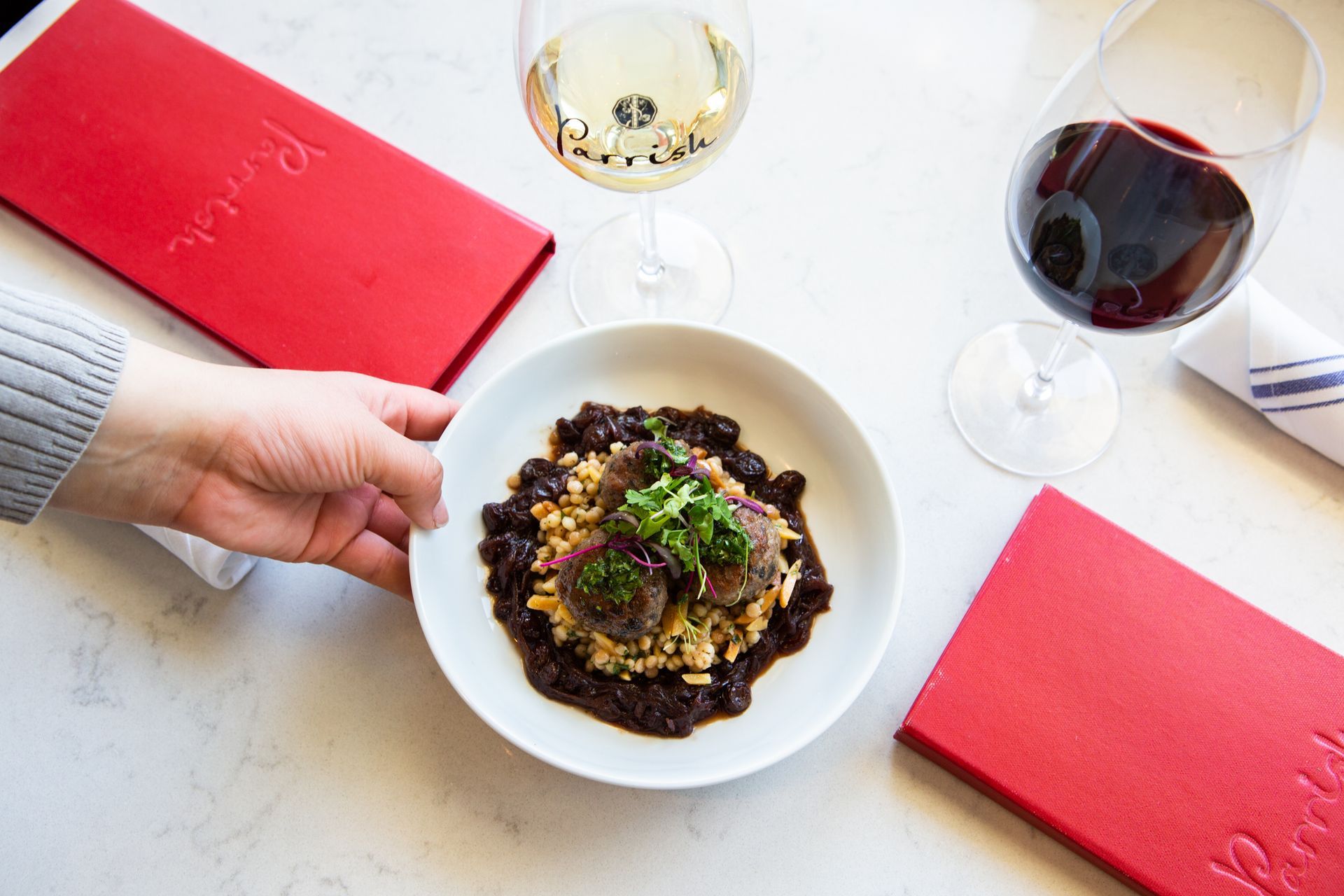
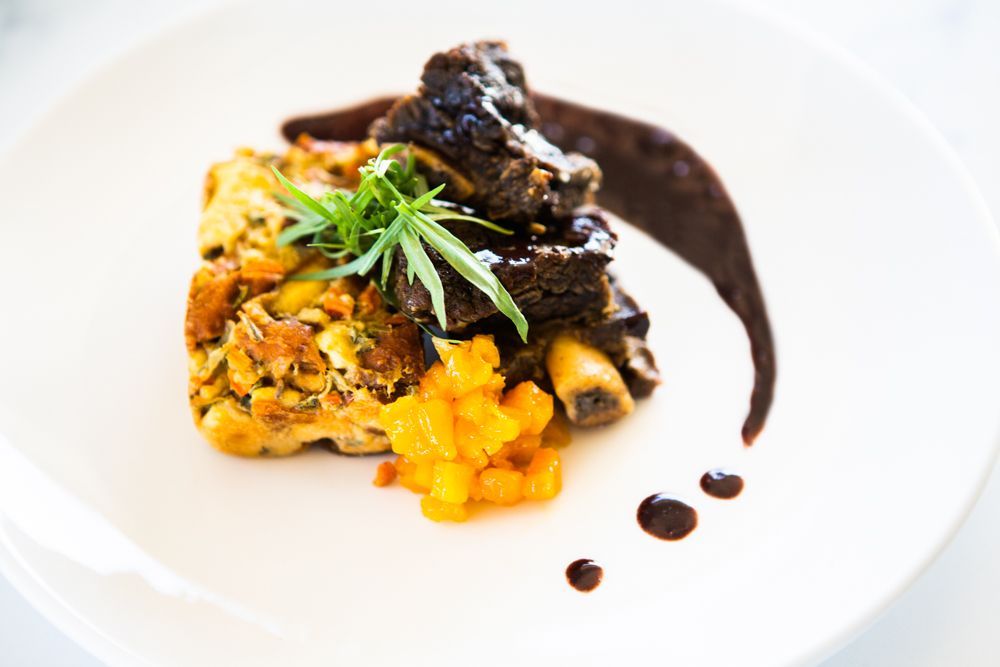
Cabernet Sauvignon pairs very well with beef, lamb, and pork. That said, the spices and rubs used on the proteins should be considered, as this will expand the pairing options to vegetables and lighter meats such as chicken, fish, and seafood. An example is using a coffee, pepper rub that could be used on smoked chicken thighs or mushroom caps. The bold rub would stand up to the structure and play with the wine’s beautiful dark fruit and baking spices.
With Cabernet’s tannic structure, we highly recommend having elements of fats in your dishes with animal fats (ie, duck fat), butter, and cheese. The creamy elements will soften the tannins in the Cab. A great way to introduce this is with an herbaceous compound butter atop a protein.
While Cabernet Sauvignon can be paired with food, it is a wine that can be enjoyed without pairings and as the highlight of an evening with friends.
Recent Posts